
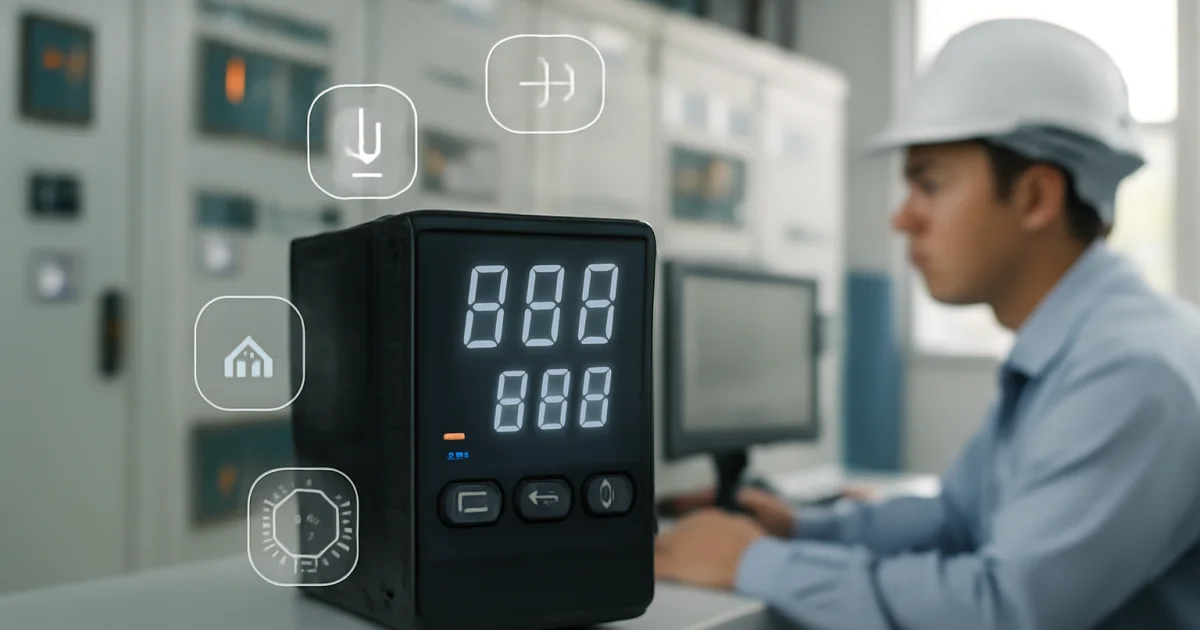
In Malaysia’s fast-evolving industrial landscape, maintaining reliable process automation and precise temperature regulation is critical for consistent quality and efficiency. For automation engineers, process industries, and equipment manufacturers, choosing the right temperature controller impacts productivity, product quality, and operational costs. Fuji Electric Temperature Controllers have built a strong reputation as a preferred solution thanks to their reliability, user-centric design, and advanced technical features. In this expert guide, we dive into what makes Fuji Electric controllers stand out for Malaysian businesses and how they help meet the demands of modern industry. If you are comparing options, this guide explains why Fuji Electric Temperature Controller Malaysia is a top consideration.
Understanding Temperature Controllers in Industrial Automation
Temperature controllers are indispensable across Malaysia’s manufacturing, electronics, food processing, and chemical industries. Their role is to regulate and maintain temperatures within tight tolerances, enabling stable and repeatable processes. Whether used in industrial ovens, drying tunnels, assembly lines, or chemical reactors, the correct controller ensures safety, product consistency, and optimized energy consumption.
Malaysian factories often operate in challenging environments, requiring controllers that are not only accurate but also robust, flexible, and compatible with a variety of process setups. Fuji Electric is widely recognized for delivering these qualities, offering temperature control solutions that integrate seamlessly with both legacy and modern automation systems.
Advanced Features That Set Fuji Electric Controllers Apart
Fuji Electric temperature controllers are engineered for demanding environments, combining innovation with practicality. Key advanced features include:
- High-Precision PID Control: Fuji controllers utilize sophisticated PID (Proportional-Integral-Derivative) algorithms. This ensures rapid, stable responses to process changes, minimizing temperature overshoot and maintaining consistent setpoints—a must for sensitive applications in electronics, food, or pharmaceutical manufacturing.
- Adaptive Auto-Tuning: Intelligent auto-tuning automatically adjusts PID parameters to match the heating or cooling characteristics of the connected system. This reduces setup and commissioning time for both engineers and maintenance teams, while optimizing long-term performance.
- Versatile Input/Output Compatibility: Supporting a wide array of sensor inputs, including thermocouples and RTDs, as well as flexible output options (relay, SSR, analog), Fuji Electric controllers can be configured for virtually any industrial heating scenario in Malaysia.
- Advanced Communication Protocols: Integration with SCADA, PLCs, and industrial networks is seamless thanks to support for RS485 (Modbus), Ethernet, and other industry-standard protocols. This enables real-time data exchange, centralized monitoring, and remote control—capabilities critical for smart factories and Industry 4.0 adoption.
- High-Visibility, User-Friendly Displays: Large, clear LED or LCD screens with intuitive menus make operation easy, even in low-light or high-noise environments. Multilingual options and guided navigation help speed up setup and troubleshooting.
- Comprehensive Alarm and Safety Features: Built-in alarms detect process deviations, sensor faults, and heater failures, providing early warnings to operators and helping prevent costly downtime. Safety interlocks and error logging further support continuous, reliable operation.
Real-World Applications in Malaysian Industries
Fuji Electric temperature controllers are widely adopted across the Malaysian industrial sector. Their flexibility and reliability make them suitable for:
- Electronics & Semiconductor Manufacturing: Precision temperature control is essential for soldering, curing, and testing. Fuji Electric’s controllers help maintain tight tolerances demanded by high-value electronic products.
- Food & Packaging: Consistent heating in ovens, dryers, and packaging lines supports food safety, quality, and production efficiency. Integration with temperature recorders and probes ensures full traceability.
- Chemical & Pharmaceutical: Stable environments for chemical reactions, distillation, or storage are maintained using advanced controllers. Alarm and safety features reduce the risk of process deviations.
- Industrial Ovens & Heaters: As used in drying, curing, or metalworking, robust temperature control ensures repeatable results and helps optimize energy consumption. For more information on available solutions, visit our Temperature Controllers page.
For system integrators and OEMs, the ability to tailor controller settings, automate sequences, and monitor processes remotely is a major advantage. Fuji Electric’s flexible I/O and communication features directly address these requirements, supporting both new installations and retrofit projects in Malaysia.
Integration, Scalability, and Customization for Malaysian Factories
Modern production environments demand scalable solutions that adapt to changing requirements. Fuji Electric temperature controllers feature modular designs, allowing users to add or modify inputs, outputs, and communication modules as operations evolve. Their broad compatibility with sensors, heaters, and control panels ensures futureproofing for process lines and equipment upgrades.
Customization capabilities—such as programmable control sequences, event-based logic, and batch processing—let engineers fine-tune controller behavior for unique manufacturing needs. This is especially valuable for businesses with diverse product lines, frequent changeovers, or specialized quality control requirements.
Seamless integration with electrical control panels and automation systems ensures smooth operation throughout the process chain. Companies like SH Heating Sdn. Bhd. offer not only Fuji Electric devices, but also technical expertise and support, helping clients maximize system reliability and return on investment. For additional information on process controllers, see our Temperature Process Controllers resource.
Best Practices for Selecting and Implementing Fuji Electric Controllers
To get the most from your temperature control investment, consider these best practices:
- Assess Application Requirements: Define the required level of temperature control, number of zones, range, response time, and integration needs. Fuji Electric offers options for everything from basic single-loop control to advanced multi-zone systems.
- Prioritize Communication and Connectivity: For facilities using SCADA, PLCs, or remote monitoring, select models with RS485/Modbus or Ethernet support. This allows for real-time data access and control from central workstations or mobile devices.
- Account for Environmental Demands: Industrial settings in Malaysia may involve high humidity, dust, or vibrations. Choose controllers with robust enclosures, wide operating temperature ranges, and appropriate ingress protection.
- Work with Experienced Suppliers: Partner with specialists like SH Heating Sdn. Bhd., who provide end-to-end services including selection advice, system integration, calibration, and after-sales technical support. Their experience helps avoid common pitfalls and ensures long-term process stability.
- Commissioning and Maintenance: Utilize auto-tuning and alarm functions during startup for optimal performance. Schedule regular inspections and review process data to detect trends or anomalies early, supporting predictive maintenance and continuous improvement.
- Upgrade Path: When replacing legacy controllers, take advantage of Fuji Electric’s backward compatibility with existing sensors and wiring, simplifying transitions and minimizing downtime.
Conclusion: Driving Industrial Excellence with Advanced Temperature Control
Fuji Electric Temperature Controllers empower Malaysian factories and process industries with reliable, accurate, and flexible temperature management. Their advanced features—ranging from precision PID algorithms and adaptive auto-tuning to robust connectivity—help businesses achieve higher quality standards, reduce waste, and enhance operational efficiency. By working with a trusted supplier and leveraging best practices, automation engineers and manufacturers can confidently implement solutions tailored to their production needs.
Whether you’re building new systems or upgrading existing lines, Fuji Electric’s temperature controllers, supplied by SH Heating Sdn. Bhd., provide the technology, support, and scalability required to remain competitive in Malaysia’s dynamic industrial sector.
Frequently Asked Questions
What advanced features do Fuji Electric Temperature Controllers offer for Malaysian industries?
Fuji Electric Temperature Controllers feature high-precision PID control, adaptive auto-tuning, versatile input/output options, advanced communication protocols (such as RS485/Modbus and Ethernet), high-visibility displays, and comprehensive alarm functions. These features are designed to meet the unique demands of Malaysia’s manufacturing, food processing, electronics, and chemical sectors.
How do Fuji Electric controllers integrate with existing automation systems in Malaysia?
Fuji Electric controllers offer seamless integration via standard communication protocols like RS485/Modbus and Ethernet, making them compatible with SCADA, PLCs, and other automation infrastructure common in Malaysian factories. This enables real-time monitoring, remote adjustments, and centralized data management.
What are the benefits of the auto-tuning function for engineers and maintenance teams?
The auto-tuning function automatically adjusts PID parameters based on actual process behavior, reducing commissioning time and ensuring optimal temperature control without manual trial-and-error. This leads to improved process stability and efficiency, especially in dynamic manufacturing environments.
Which Malaysian industries commonly rely on Fuji Electric Temperature Controllers?
Industries such as electronics and semiconductor manufacturing, food and packaging, chemical and pharmaceutical production, and facilities operating industrial ovens or heaters commonly use Fuji Electric controllers for their precision, flexibility, and robust safety features.
Does SH Heating Sdn. Bhd. offer support and integration services for Fuji Electric controllers?
Yes, SH Heating Sdn. Bhd. provides expert advice on product selection, system integration, calibration, and after-sales technical support to ensure clients achieve the best performance with Fuji Electric Temperature Controllers.
Unlock Advanced Temperature Control for Your Process
Ready to enhance your production with Fuji Electric Temperature Controllers? SH Heating Sdn. Bhd. delivers expert solutions, seamless integration, and dedicated local support for all your industrial heating and automation needs.